More Than Waste Diversion: The Environmental Impact of Tire Recycling
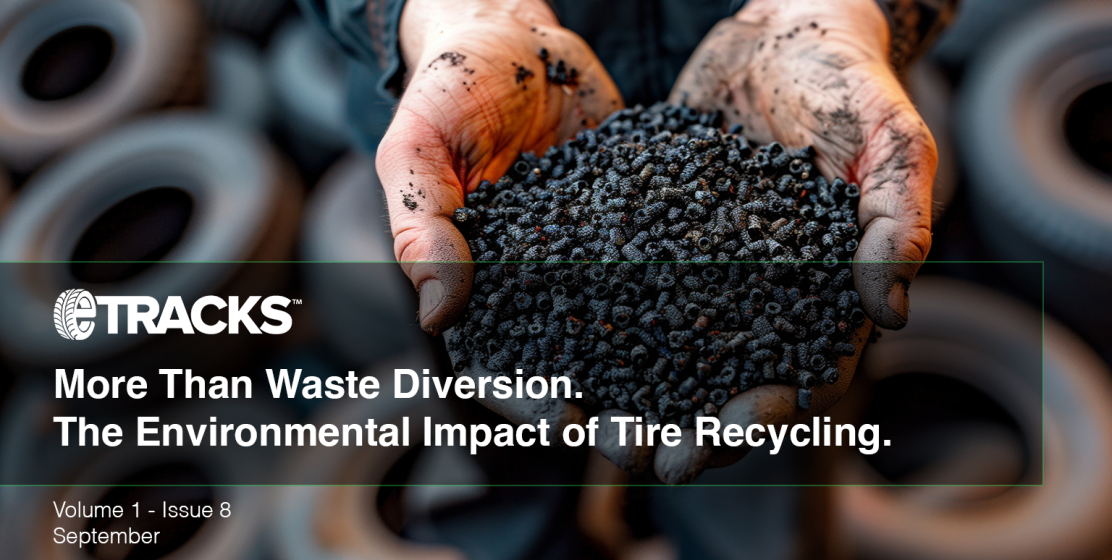
Tire recycling does more than keep end-of-life tires out of the waste stream. By recovering rubber, steel, and fibre and putting these materials back to productive use, tire recycling can reduce demand for new materials and deliver measurable environmental benefits.
Across Ontario, end-of-life tires move through a broader resource recovery system, from collection and processing to productive end use. But what environmental difference does that journey make?
The Journey of an End-of-Life Tire
When Ontario drivers replace their tires, they can drop end-of-life tires off at participating retailers, automotive service centres, and other collection sites. Haulers then transport the tires to processing facilities, where the tires may be prepared for retreading or separated into materials such as rubber, steel, and fibre.
These recovered materials can become inputs for roads, construction materials, industrial products, and other applications people may encounter every day without realizing recycled tire material is present.
How Tire Recycling Benefits the Environment
Tire recycling has its own environmental footprint. Collection, transportation, processing, and manufacturing all require energy and resources. Understanding the overall benefit means comparing these impacts with those potentially avoided when tire-derived products replace conventional materials or products.
What the Metrics Measure
- Climate Change: Greenhouse gas emissions that contribute to climate change.
- Smog Formation: Pollutants that contribute to ground-level ozone and poor air quality.
- Human Health Particulates: Fine airborne particles that can affect air quality and human health.
- Acidification: Emissions that can contribute to acid rain and affect soil, forests, and waterways.
- Ozone Depletion: Impacts on the protective ozone layer in the upper atmosphere.
- Eutrophication: Nutrient-related emissions that can disrupt aquatic ecosystems.
- Blue Water Depletion: Net freshwater use associated with producing materials and products.
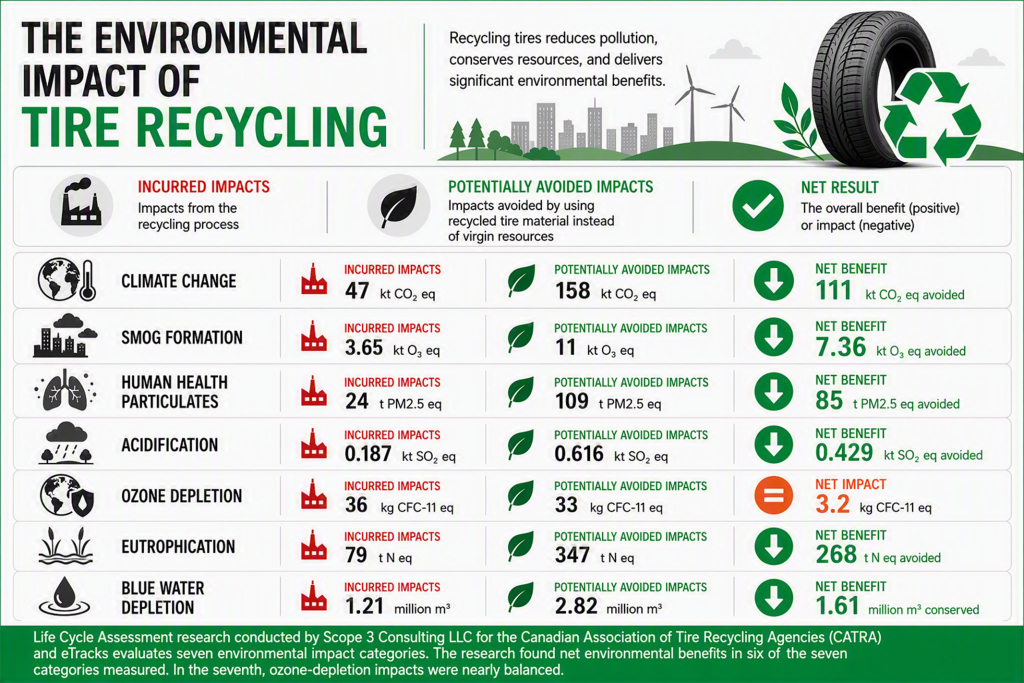
About the data: Net results represent the difference between impacts incurred through tire recycling and impacts potentially avoided when tire-derived products displace conventional materials or products. Results are based on CATRA’s Life Cycle Assessment modelling. Values are rounded, and net results calculated using the underlying unrounded data may differ slightly from calculations using the figures displayed.
Together, these results show that the environmental value of tire recycling extends beyond diversion and across several areas of environmental performance. Achieving those benefits, however, depends on the system behind the results.
The System Behind the Results
These environmental results depend on participants across Ontario’s tire resource recovery system.
Collection sites provide accessible drop-off locations, haulers move tires to processors, and processors recover materials that manufacturers can transform into new products. Producers, Producer Responsibility Organizations, and market partners help support the collection, management, accountability, and demand required to keep materials moving through the system.
No single organization delivers these outcomes alone. Environmental benefits are achieved when participants across the system help move tires responsibly from collection to productive end use.
Putting Recovered Materials to Productive Use
Recovered rubber, steel, and fibre can be incorporated into moulded rubber goods, rubber-modified asphalt, retreaded tires, construction materials, and other manufacturing inputs.
The environmental benefit associated with an application depends on factors such as manufacturing, transportation, product performance, and the conventional material being replaced. Productive end markets create demand for recovered materials and help translate resource recovery into measurable environmental benefits.
Ontario’s tire resource recovery system demonstrates an important circular-economy principle: when a product reaches the end of its original use, its materials may still have value.
A tire may no longer be suitable for the road, but its rubber, steel, and fibre can continue serving a purpose. Keeping these materials in use can reduce demand for new resources and extend their value beyond a tire’s first life.
Continued innovation in product design, manufacturing, and material recovery can help keep tire-derived materials in circulation for longer.
Tire recycling is about more than managing waste. It is a resource recovery system that can conserve resources, reduce environmental impacts, and support the transition toward a more circular economy.